
Introduction
For small business owners, navigating legal requirements around cash handling can feel overwhelming. From tax reporting obligations to anti-money laundering (AML) compliance, the rules are strict—and the penalties for non-compliance are significant. A reliable money counter with counterfeit detection isn’t just a convenience; it’s a critical tool for maintaining accurate records, meeting reporting deadlines, and protecting your business from legal and financial risks. By automating cash verification and record-keeping, you build a defensible audit trail that demonstrates compliance during regulatory reviews.
Understanding Your Legal Cash Handling Obligations
Cash is still king for many businesses, but accepting it brings specific legal responsibilities. These requirements vary by jurisdiction but generally fall into three main categories: tax reporting, AML compliance, and consumer protection. Let’s break down what you need to know.
Tax Reporting: When a Cash Transaction Triggers a Filing
In the United States, the IRS requires businesses to report cash transactions exceeding $10,000 using Form 8300, “Report of Cash Payments Over $10,000 Received in a Trade or Business”. This isn’t a suggestion—it’s a federal requirement designed to combat money laundering and tax evasion.
Cash flow tracking is essential here: if you receive $6,000 today and $6,000 tomorrow from the same customer for the same purchase, you must file Form 8300, as these are considered related transactions. A bill counter with recording capabilities helps you maintain accurate records of these transactions, making Form 8300 completion straightforward and reducing the risk of errors.
Anti-Money Laundering (AML) Compliance for Small Firms
AML regulations require businesses to implement systems that prevent their services from being used for money laundering or terrorist financing. For small businesses, this means:
- Conducting a firm-wide risk assessment: Identifying the specific AML risks your business faces based on your clients, services, and geographic exposure.
- Having written AML policies and procedures: These translate your risk assessment into practical daily steps, explaining how you perform customer due diligence and report suspicious activity.
- Performing Customer Due Diligence (CDD): Verifying customer identities using reliable evidence and maintaining professional scepticism, even with seemingly low-risk clients.
- Training staff: Ensuring employees can recognize and deal with transactions that may be related to money laundering.
- Keeping thorough records: Maintaining records of all AML-related activities to demonstrate compliance during audits.
Small businesses face unique compliance challenges. Unlike large enterprises with dedicated compliance teams and continuous monitoring systems, small firms often rely on a single AML officer and periodic reviews. Automated tools—including advanced bill counters—can significantly reduce this burden by streamlining cash verification and record-keeping.
Cash Acceptance Mandates: The Need to Be Prepared
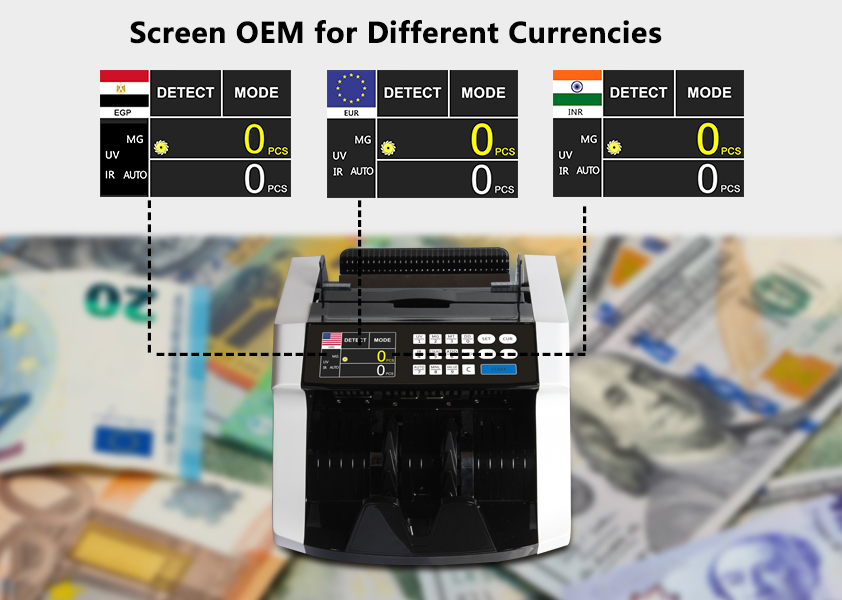
Some jurisdictions mandate that certain businesses must accept cash. In Australia, for example, from 2026, supermarket and motor fuel retailers must provide customers with a reasonable opportunity to pay in cash for in-person transactions of $500 or less between 7 am and 9 pm. While small businesses with less than $10 million turnover are generally exempt, those using a registered trademark also used by a larger business must comply. Compliance requires maintaining sufficient cash on hand to provide change, establishing cash floats, training staff, and setting up secure cash handling procedures. A currency counter with multi-currency support ensures your cash floats are accurate and ready for business.
How Bill Counters Support Legal Compliance
A high-quality bill counter does more than count notes—it builds the infrastructure for regulatory compliance through automation, accuracy, and accountability.
1. Accurate Record-Keeping for Tax Reporting
For Form 8300 reporting, you need precise records of large cash transactions—the date, amount, and customer information. A bill counter with a built-in audit trail creates an automatic digital record of every cash batch processed, including timestamps, operator IDs, and denomination breakdowns. This eliminates the guesswork and manual errors that can lead to incomplete or incorrect filings. With exportable data (USB, CSV, or accounting software integration), you can quickly generate the information needed for forms, audits, or internal reviews.
2. Enhanced Counterfeit Detection Protects Against Liability
Accepting counterfeit bills isn’t just a financial loss—it can also attract regulatory scrutiny. If your business unknowingly passes counterfeit currency to a bank or is found to have inadequate verification measures, you may face penalties or increased oversight. A reliable money counter with counterfeit detection combines multiple verification methods—UV (Ultraviolet), MG(Magnetic), IR (Infrared), and CIS (Contact Image Sensor) technology—to catch fakes before they enter your cash flow. This proactive measure protects your business from both financial losses and compliance risks.
3. Building a Defensible Audit Trail
Regulators expect businesses to demonstrate accountability for their cash handling. A bill counter with audit trail capabilities records:
- Operator identification: Who counted each batch?
- Timestamps: When was the cash counted?
- Transaction details: What denominations were counted, and what was the total value?
This digital trail provides clear, chronological records that auditors can review to verify your cash handling procedures. It also supports internal fraud prevention—if a discrepancy arises, you can trace it back to the specific operator and batch, identifying potential issues quickly.
4. Strengthening Internal Controls and Fraud Prevention
Weak internal controls are a primary driver of cash fraud, which affects small businesses disproportionately. By automating cash counting and verification, a bill counter reduces reliance on manual processes and creates a clear separation of duties. For example, instead of one employee manually counting and recording cash, the machine provides an objective, verifiable count that can be cross-checked by another employee during reconciliation. This simple control aligns with best practices in financial controls